For owners and buyers weighing a decision below Fifth Street while the county's condominium numbers look soft. This guide covers what the map protects, and what it cannot.
The Takeaway
South of Fifth's resale strength comes from the map, not from market sentiment.
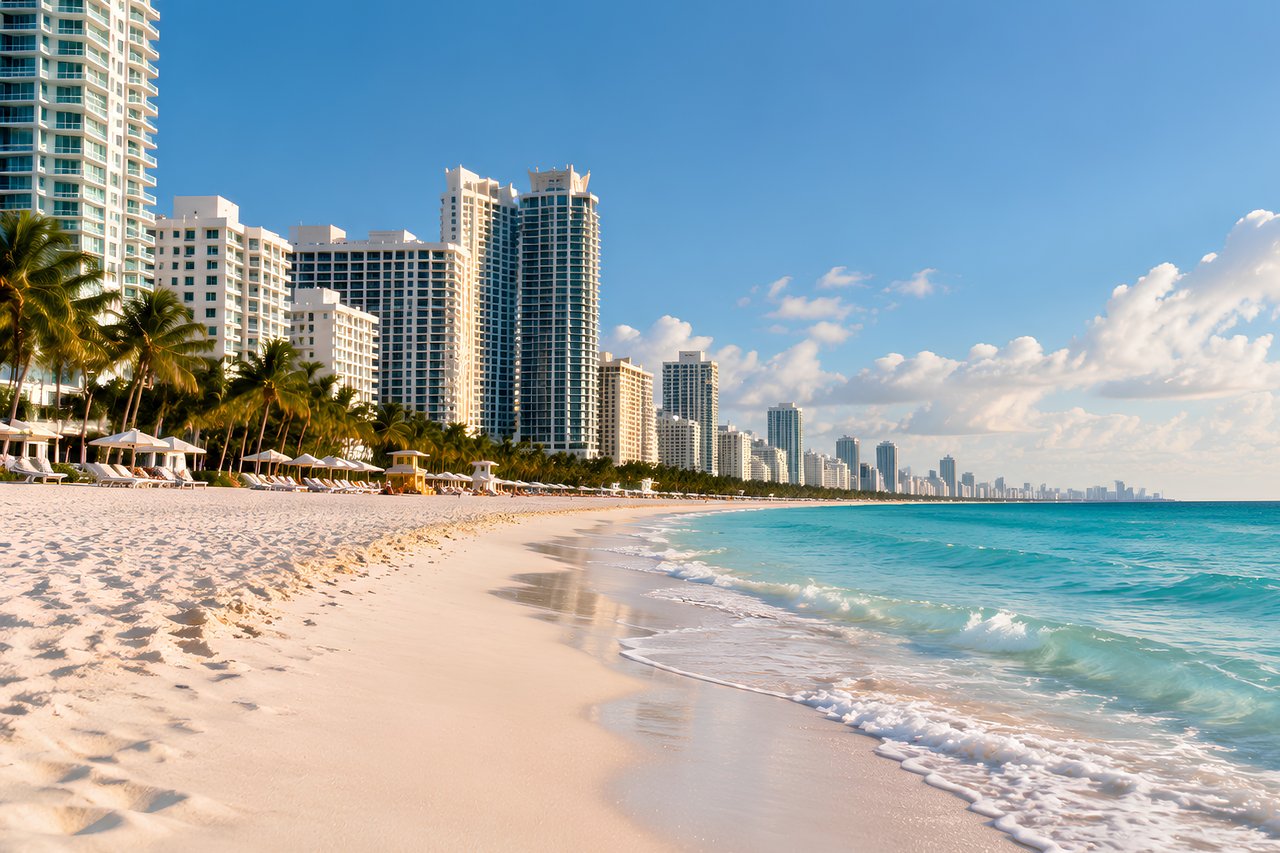
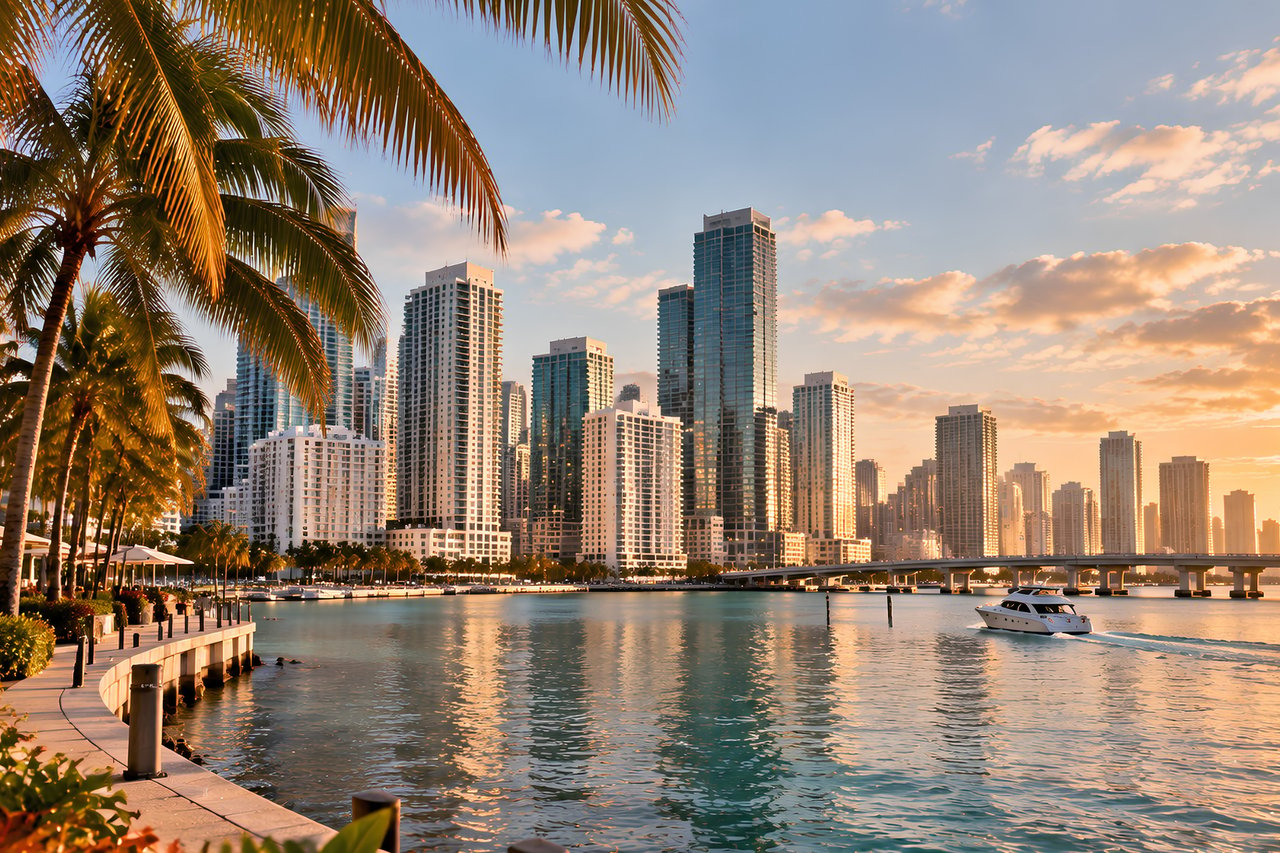
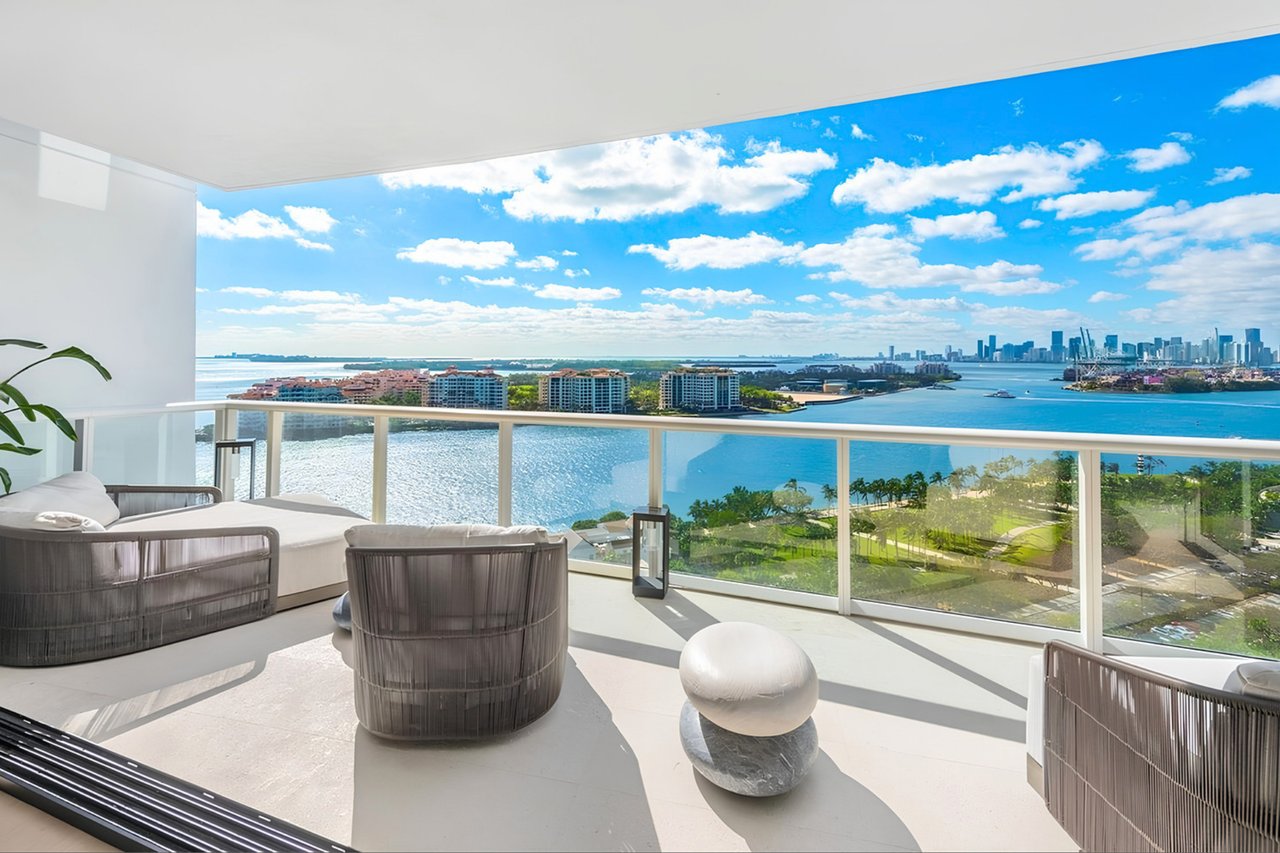
The neighborhood occupies roughly five blocks at the southern tip of Miami Beach, bounded by the Atlantic, Biscayne Bay, and Government Cut. Fifth Street is the only land edge. One road in. No traffic passing through. No vacant parcel left inside the perimeter.
When Miami-Dade adds condominium stock, SoFi structurally cannot. That is why countywide softness reads differently here — and why owners who confuse the two numbers misprice in both directions, waiting too long or launching too high.
What the One-Bridge Problem Actually Is
Start with the map, because the map is the asset.
South of Fifth runs from about First Street to Fifth Street, water on three sides. The seventeen acres at the tip belong to South Pointe Park — permanent public land that will never carry a tower. Vehicles enter from the north, off Fifth Street, fed by the MacArthur Causeway. Nobody drives through this neighborhood on the way to somewhere else, because there is no somewhere else.
Planners treat that as a defect: a single arterial, one direction of egress, a bottleneck at Fifth and Alton on a Saturday night when Joe's Stone Crab and Prime 112 are both turning tables. I live here, and I complain about it too.
The compensation is that the neighborhood ends in a park rather than a thoroughfare. Walk to the South Pointe Pier at dusk and you watch cruise ships slide out through Government Cut. That view belongs to five blocks of Miami Beach, and no one can build another one.
But the constraint that makes the neighborhood inconvenient is the same one that makes it inelastic. A supply shock cannot reach SoFi the way it reaches Edgewater or Brickell, because there is no site for a developer to option. The buildings that stand here are the buildings that will stand here.
I notice it most in what buyers ask me. In Brickell they ask what is coming next. Here they ask who might sell.
Why the County Number Does Not Describe Your Building
The headline figure is real. It is also measuring something other than your home.
According to July 2026 statistics from MIAMI REALTORS® + RWorld, Miami-Dade carried roughly twelve months of supply in existing condominiums, against about 4.8 months for single-family homes. Six to nine months is generally considered balanced, so on its face that is a buyer's market.
Two details complicate it. Active condo listings contracted close to twelve percent year over year, to just over 11,300, so the pile is shrinking rather than building. And countywide sales at one million dollars and above climbed more than fifteen percent from the prior July.
Miami-Dade is not one market. It is an oversupplied mid-tier and a firm upper tier, and averaging them produces a number that describes neither.
Carlo's Insight: That twelve-month figure is drawn largely from buildings I would never put in a comparable set for a SoFi residence. Different land, different buyer, different constraint.
Should I Wait for the County Numbers to Improve Before Listing?
Usually not. You would be waiting on a statistic built largely from inventory that never competes with your building.
Read more: For how to price and position a home when the market is running at two speeds → Selling Luxury in a Two-Speed Market: A Miami Beach Seller's Playbook for Late 2026
What Actually Trades Here
Scarcity is a theory until it shows up on a settlement statement.
In late August 2026, The Real Deal reported the sale of two adjoining residences at Continuum on South Beach, 100 South Pointe Drive, for $18.4 million — roughly $4,181 per square foot across about 4,400 square feet. Sonia Toth of Brown Harris Stevens and I represented the sellers. One unit had been acquired in 2003 for $2.2 million.
That is two decades of holding a finite position on a peninsula that cannot expand, closed into a county the headlines were calling oversupplied.
Does More Inventory North of Fifth Street Hurt Me?
Less than owners assume. A buyer set on a walkable waterfront enclave with no through traffic is not cross-shopping a mainland tower. Your competition is a handful of addresses inside the perimeter.
Read more: For how the same land-constraint logic prices Miami Beach's private islands → What a $51.5 Million Record Sale Reveals About Buying on Palm and Hibiscus Island
Where the Geography Stops Protecting You
Here is the part most SoFi owners would rather not hear. The map protects the land. It does not protect your unit — and since 2022, Florida law has widened that gap.
Senate Bill 4-D, passed after the Surfside collapse, requires milestone structural inspections for buildings three stories and taller — at 30 years, or 25 years within three miles of the coast, which is every tower below Fifth Street. It also mandates a Structural Integrity Reserve Study, and for budgets adopted on or after December 31, 2024, associations may no longer vote to waive or underfund reserves for the structural components that study covers. Later amendments, SB 154 in 2023 and HB 913 in 2025, moved the study deadline and added narrow funding flexibility, but the waiver prohibition stands.
Continuum's South Tower opened in 2002 and Murano Grande in 2003, which puts both inside the 25-year milestone window. Serious buyers here read the reserve study and the inspection report before they will discuss a number. Funded reserves and clean documentation compound the geography. An unresolved assessment cancels it out.
Is Scarcity Enough to Carry an Overpriced Listing?
No. Owners who assume the zip code carries them launch high, and the market corrects them slowly and expensively. Land constraint is a floor, not a lever.
Read more: For what buyers below Fifth Street are actually paying a premium for right now → What Are Miami Beach Luxury Buyers Willing to Pay a Premium For in 2026?
Strategic Positioning for Owners
Price to your line, not the county. Exposure, floor band, and tower set your number.
Get the building file in order first. Reserve study, milestone inspection status, and assessment history are checked before price comes up.
Treat the geography as a floor, not a forecast. Land constraint protects the downside. Condition captures the upside.
Compare inside the perimeter. Continuum, Apogee, Murano Grande, Icon South Beach, Portofino Tower, Ocean House and a few boutique addresses are your comparable set. A county average is not.
List into the season. The qualified pool thickens through winter and spring, and thins fast after.
Final Perspective
The one-bridge problem is an inconvenience and an asset, and it is the rare case where those are the same fact. A neighborhood traffic cannot pass through is also one that stock cannot flood.
It is a floor, not a guarantee, and floors only help owners who price above them honestly. I live and work below Fifth Street, and I read these buildings line by line.
Work With Carlo Dipasquale
The address does part of the work. The strategy does the rest. For a precise read on where your specific residence sits — building, line, and exposure — connect with Carlo Dipasquale for a private consultation.
FAQ
Is South of Fifth still a good buy with Miami-Dade condo supply this high? The countywide figure is weighted toward stock that does not compete with SoFi. The question is which building and which line, not which county.
Why does South of Fifth hold value better than other Miami Beach neighborhoods? Land constraint. Water on three sides, a park at the tip, and no developable parcels left.
How does Senate Bill 4-D affect South of Fifth condos? Every tower below Fifth Street sits within three miles of the coast, so milestone inspections apply at 25 years rather than 30, and reserves for structural components can no longer be waived. Reserve strength now moves price directly.
Does the traffic bottleneck at Fifth Street hurt values? Not historically. Buyers here are choosing the neighborhood for the absence of through traffic, and that same constraint keeps stock fixed.
Miami-Dade market figures are drawn from July 2026 statistics published by MIAMI REALTORS® + RWorld. The Continuum transaction detail is drawn from reporting by The Real Deal. Statutory requirements described reflect Florida Senate Bill 4-D as amended by SB 154 (2023) and HB 913 (2025); association deadlines vary by building and should be confirmed directly. General market observations reflect the South of Fifth segment and are not a substitute for a residence-specific valuation. Building financials, reserve status, and recertification records should be verified with the relevant association before listing. Carlo Dipasquale is a real estate agent affiliated with Compass. Compass Florida, LLC d/b/a Compass is a licensed real estate broker and abides by equal housing opportunity laws.