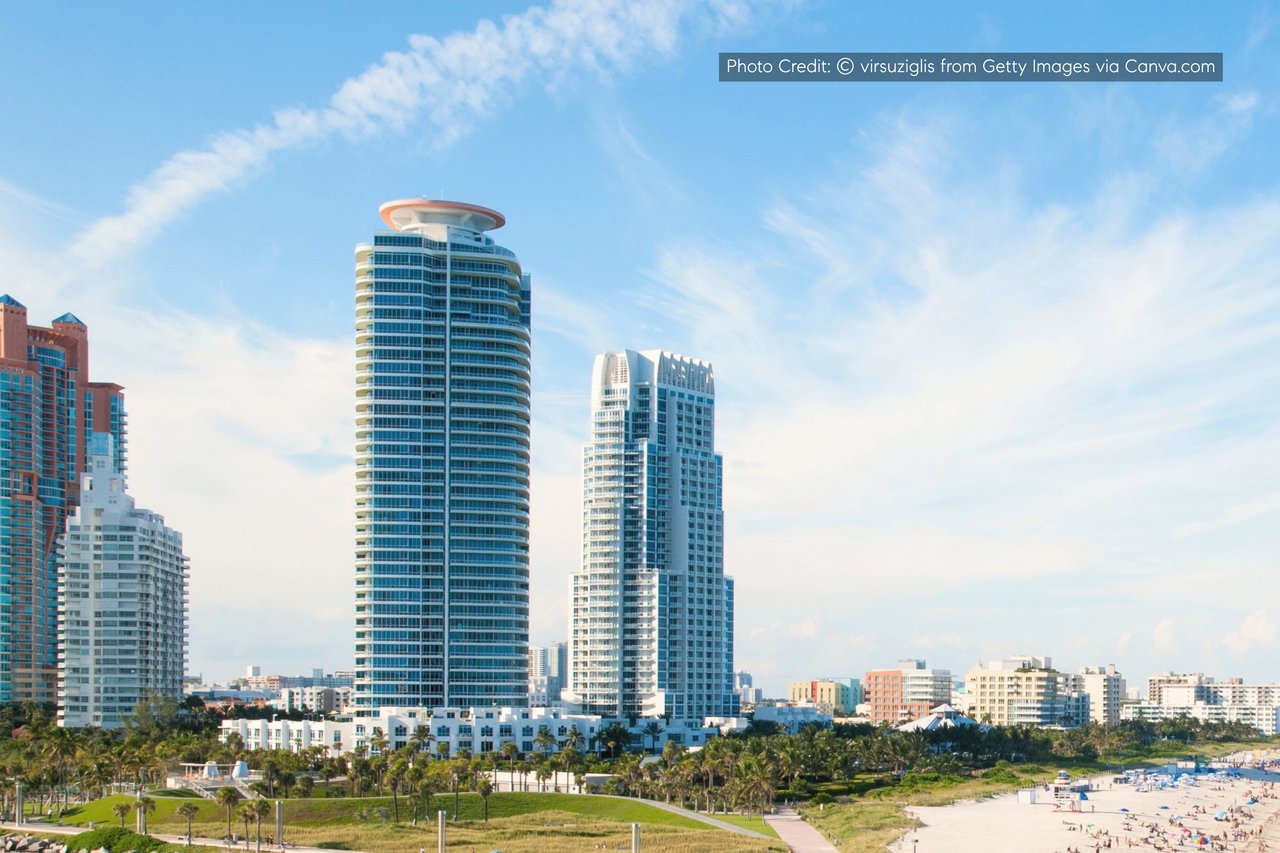

For homeowners across Miami Beach weighing a listing before high season. This guide covers why the county's houses and condominiums have stopped moving together, and what that split means for the number you put on your property.
The Takeaway
Miami-Dade is no longer one market. It is two, moving in opposite directions, and the strategy that works for a house on Sunset Islands will fail a condominium on Collins Avenue.
According to Compass market data compiled via Trendgraphix, single-family sale prices in Miami-Dade averaged $1,463,000 in July 2026, a 14.5% gain over the year. Condominiums averaged $730,000 over the same period, down 11.6%. Both figures come from the same county, the same month, the same report. Sellers who price to a countywide impression instead of their own segment give away the difference.
Factor 1: What the Split Actually Means
Houses and condominiums are being valued on different logic now. One is priced on land. The other is priced on the building's balance sheet.
That distinction did not exist in the same form five years ago, when a rising tide carried both. It exists today because the risks attached to each have diverged. Land does not require a reserve study. A tower does.
My view: the single most expensive mistake I see this fall is an owner anchoring to what a neighbor's property did eighteen months ago, without asking whether that neighbor was selling the same kind of asset. A house and a condominium two blocks apart are no longer comparable trades.
Factor 2: Why Houses Still Hold Leverage
A 14.5% annual gain is real strength, and it rests on something that does not reverse quickly. Buildable, well-positioned land on the barrier islands is effectively fixed in supply.
You cannot manufacture another Sunset Islands lot. You cannot widen a Venetian Islands parcel. When a buyer wants a specific site, whether for the view corridor, the frontage, or the chance to build something that cannot be built anywhere else, the negotiation is not really about the house standing on it. I have watched buyers pay well past comparable value for a lot that completes a plan they had already committed to, and pass entirely on a better house that did not.
That is why lot characteristics deserve more weight in your pricing than the finishes inside.
Read more: How frontage, exposure, and lot geometry drive value on the water → What Really Drives Sunset Islands Waterfront Home Values.
Factor 3: Why Condominium Sellers Face a Harder Room
The 11.6% decline is not a mystery, and it is not a verdict on Miami Beach. It is the market repricing building risk after Florida changed the rules.
Senate Bill 4-D, passed after the 2021 Surfside collapse, requires condominium and cooperative buildings of three stories or more to complete milestone structural inspections and structural integrity reserve studies. It also ended the long-standing practice of associations voting to waive or underfund reserves, with full funding required as of December 31, 2024. Buildings that deferred maintenance for decades are now settling that bill, sometimes through special assessments, and buyers have learned to ask before they offer.
Here is the part sellers underestimate: this cuts both ways. In a well-run building with funded reserves and a clean inspection, that same scrutiny becomes an advantage. The buyer who has just walked away from three towers with pending assessments will pay for certainty. Sellers who can hand over documentation on day one are competing against sellers who cannot.
Factor 4: The Inventory Paradox
Supply is tightening, and sales are slowing at the same time, which sounds contradictory until you separate who is doing what.
Active listings fell 17.5% to 15,915, and months of inventory dropped 15.6% to 8.6. Meanwhile, the average sale took 87 days, up 10.1%, and the list-to-price ratio held flat at 90%. Sellers are withdrawing from the market faster than buyers are. The buyers who remain are still paying close to asking price; they are simply taking longer to decide.
For a seller, that combination is more favorable than the headlines suggest. You face less competition than a year ago. You just need patience and an accurate opening number, because a mispriced launch now costs you weeks you will not get back before season.
Read more: For the market signals worth reading before you list → Thinking of Selling in Miami? Five Market Numbers to Read First
What Sellers Are Asking Right Now
Should I wait for the condo market to recover before listing? Waiting does not improve a building's reserve position, and it does not resolve a pending assessment. If your building is sound, that strength is worth more now, while buyers are actively rewarding it, than it will be when supply returns.
Does the 90% list-to-price ratio mean I should list 10% high? No. That ratio reflects where properties actually close relative to their asking price, including the ones that were repriced downward first. Building a cushion into your launch price tends to produce the discount, not prevent it.
Is my house worth more because prices rose 14.5%? Not automatically. That figure is a countywide average across every price band. Your lot, your street, and your exposure will move your number far more than any county statistic.
Strategic Positioning for Sellers
Price to your asset class. A house is valued on land and site. A condominium is valued on the building. Do not mix the two.
Protect the opening weeks. With days on market up to 87, the first three weeks carry your most motivated audience.
Document the building before you list. Reserve study, assessment history, and inspection status, ready before the first showing.
Read the lot, not the county. Frontage, exposure, and redevelopment potential set the ceiling on the single-family side.
Time the launch toward season. Qualified buyers thicken through winter and spring, and a longer average sale cycle means listing earlier than you think.
Final Perspective
A two-speed market does not punish sellers. It punishes imprecision. The owners who do well this fall will be the ones who understood which of the two markets they were actually selling into, and priced accordingly. The county average is a weather report. Your address is the forecast that matters.
Work With Carlo Dipasquale
Every property sits somewhere specific inside these numbers. If you are weighing a sale in Miami Beach or South of Fifth this fall, connect with Carlo Dipasquale for a private read on your home, your segment, and your timing.
FAQ
Is now a good time to sell a house in Miami Beach? Yes. Prices are up 14.5% year over year, and there is less competition than a year ago. Just list earlier than you think, since sales are taking longer.
Why are Miami condo prices dropping? Buyers are pricing in the cost of Florida's post-Surfside inspection and reserve rules. It is building risk, not weak demand for Miami Beach.
Is it a good time to buy a Miami-Dade condo? For buyers, this is the better side of the market. Prices are down 11.6%, and there is real room to negotiate, especially in buildings that have already handled their reserves.
How long will my home take to sell? About 87 days on average right now. Well-priced homes in strong locations still move faster.
What do I need before listing my condo? Your reserve study, inspection status, recent budgets, and assessment history. Buyers ask early, and having it ready puts you ahead.
Market figures are drawn from Compass market data compiled via Trendgraphix, covering single-family and condominium sales in Miami-Dade for July 2026, measured year over year, and are considered approximate and subject to revision. Condominium safety and reserve requirements reflect Florida Senate Bill 4-D and subsequent amendments; verify current obligations with your association. General observations reflect the Miami Beach market and are not a substitute for a property-specific valuation. Carlo Dipasquale is a real estate agent affiliated with Compass. Compass Florida, LLC d/b/a Compass is a licensed real estate broker and abides by equal housing opportunity laws.