For owners of high-value condominium residences in Miami Beach and across Miami-Dade who are considering a sale in the next twelve months. This guide covers why building-level financial health has become a pricing input at the top of the market, which structural requirements apply to your address, and how to present that file so it works in your favor.
The Takeaway
The Miami-Dade condominium market has split into two markets, and the dividing line is no longer age, view, or even address. It's whether the building's structural and financial file is complete.
Buildings with completed inspections and funded reserves are financeable, insurable, and easy for a buyer's attorney to clear. Buildings without that file have a narrower buyer pool and price accordingly. If your association has done the work, that is not administrative trivia. It is one of the strongest arguments in your listing, and most sellers never make it.
I've watched two comparable residences on the same stretch of South Pointe Drive perform completely differently, and the variable was the association's paperwork, not the finishes.
Why Is Building Quality Suddenly a Pricing Factor?
Because financing eligibility now turns on it, and financing eligibility determines how many people can bid on your home.
The high end of Miami-Dade is moving. According to MIAMI REALTORS® + RWorld's July 2026 statistics, total sales at $1 million and above climbed 15.5% year over year, from 341 to 394 transactions, while existing condominium sales rose 11.4%. The same report notes what is constraining the condo market from strengthening further: of the 2,397 condominium buildings across Miami-Dade, Broward and Palm Beach counties, only 21 carry FHA approval — under 1% — and Fannie Mae and Freddie Mac eliminated the limited review option for many condominium loans on August 3, 2026.
Read that as a seller. Demand at the top is real and growing. The friction is at the building level. A residence in a compliant, well-reserved association keeps its financing buyers in the running alongside cash. A residence in a building that can't demonstrate its position quietly becomes a cash-only asset, and cash-only assets trade at a discount to their own comps.
What Are Milestone Inspections and Reserve Studies?
They are two separate reviews on two different clocks, and they answer different questions.
The milestone inspection is structural. A licensed engineer or architect examines the load-bearing elements and primary structural systems of a condominium or cooperative building and attests to their condition. Phase 1 is visual. Phase 2 follows only where substantial deterioration is identified.
The Structural Integrity Reserve Study, or SIRS, is financial. It prices what the roof, structure, waterproofing, fire protection, plumbing and electrical systems will cost to maintain or replace, and it sets what the association must be putting aside each year.
Both originate in Florida Senate Bill 4-D, passed in 2022 following the Champlain Towers South collapse, and refined by SB 154 in 2023 and HB 913 in 2025. The change that reshaped the market: for structural components identified in a SIRS, boards can no longer vote to waive reserve funding. Budgets adopted on or after December 31, 2024 must fund them. Deadlines have moved more than once — the original SIRS deadline of December 31, 2024 was extended to December 31, 2025 under HB 913, and associations whose milestone inspection is due by December 31, 2026 may complete the reserve study alongside it.
The associations that got ahead of this are now selling into a market that rewards them for it.
Why Does South of Fifth Run on the 25-Year Coastal Clock?
Because the neighborhood sits entirely inside the three-mile coastal band, which accelerates the schedule by five years.
Miami-Dade has run a building recertification program since 1975. In June 2022 the county commission aligned it with the new state milestone requirements. Under that framework, condominium and cooperative buildings three stories or taller within three miles of the coastline face their first structural review at 25 years, then every ten years after. Inland buildings get 30.
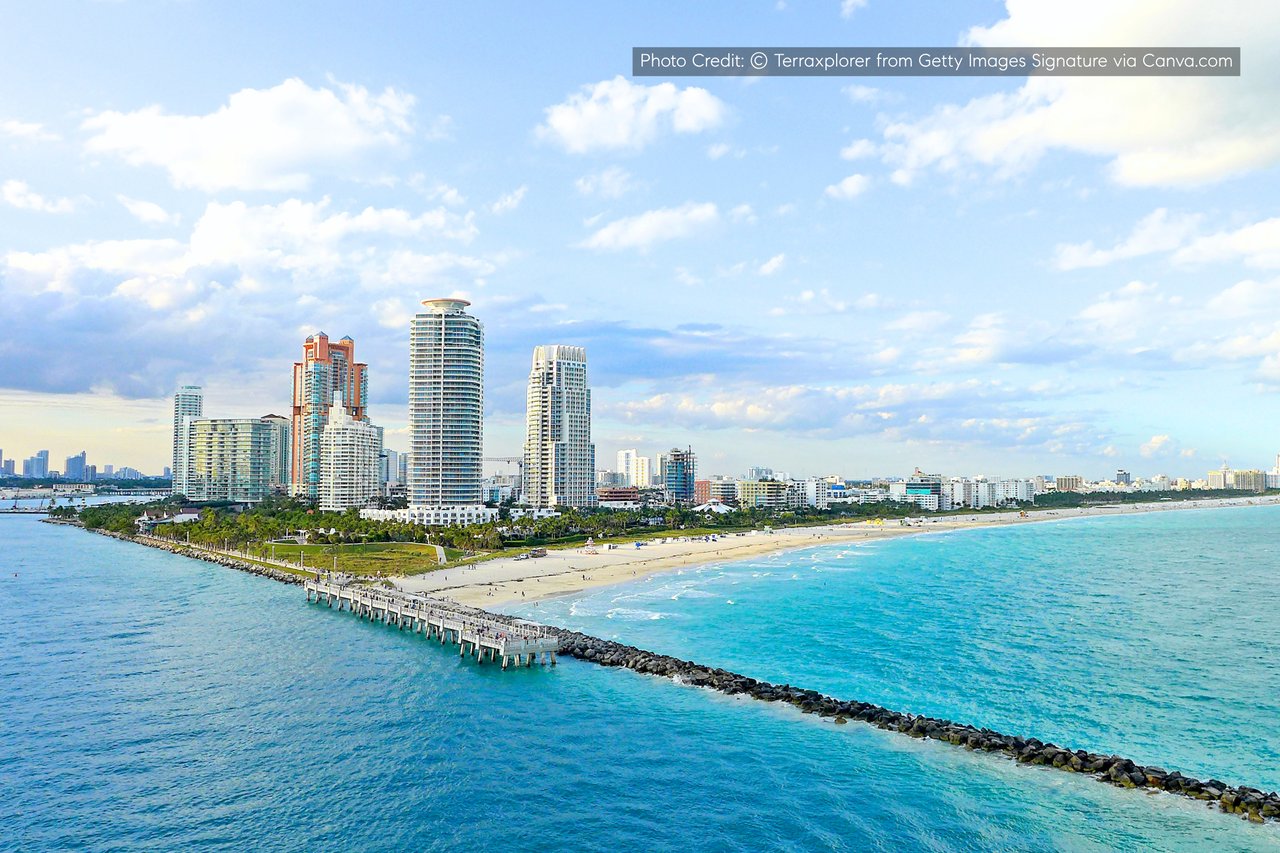
Everything from Government Cut north to Fifth Street is inside that band. So is Ocean Drive, so is Collins, so is every tower on South Pointe Drive within sight of the park and the pier. The neighborhood's late-1990s cohort — Portofino Tower, Il Villaggio, the Yacht Club at Portofino — has already moved through the earlier county deadlines. The 2000s wave that defines South of Fifth today, running from Murano at Portofino and Murano Grande through the Continuum towers, Icon South Beach and Apogee, is arriving at its first 25-year mark across this decade and the next.
I live at the Continuum, so I follow this from both sides of the door. The buildings in this neighborhood are overwhelmingly well-capitalized and professionally managed. That is exactly why the compliance story is worth telling rather than avoiding.
Read more: For how building documentation and presentation work together in a coastal condo listing → What Luxury Buyers Expect From Surfside Listings Today
What Sellers Are Asking Right Now
Should I wait for my building to finish its inspection before listing? Usually no. If completion is weeks away, wait. If it's a year out, you're trading a live market for a stale comp set. Disclosed status, priced correctly, outperforms a delayed listing.
Does a funded reserve really move my price? It moves your buyer pool, which is where price comes from. Keeping mortgage buyers eligible alongside cash buyers is worth real money at every tier, including above $10 million.
My building has an approved assessment. Is the sale dead? No, and this is the most common misconception I correct. A quantified, addressed cost is manageable. An unquantified one is what kills deals.
How Do You Turn a Compliance File Into a Premium?
By putting it forward early, in specific terms, instead of waiting to be asked.
Most listings in this market say nothing about the building's structural or reserve position, which leaves the buyer to assume the worst and investigate on their own timeline. That hands control of the narrative to the other side. The stronger approach is to lead with it: completed inspection, phase status, reserve funding percentage, no open assessments, next review date. Five facts, stated plainly, before anyone has to ask.
Buyers from New York, Milan, São Paulo and Bogotá are underwriting Miami-Dade condominiums more carefully than they did five years ago, often through counsel and often in their own language. When I can hand that file over on day one, the conversation moves to the residence. When I can't, the conversation stays on the building for weeks.
Read more: For how to price and position a Miami Beach residence in the current split market → Selling Luxury in a Two-Speed Market: A Miami Beach Seller's Playbook for Late 2026
If There Is an Assessment, How Should You Handle It?
Three clean options, all standard in Miami-Dade resale transactions. Pay the outstanding balance at or before closing so the buyer takes title free of it. Offer a closing credit equal to the amount. Or price the residence with the obligation visibly built in and say so.
What consistently underperforms is hoping the number resolves itself during escrow.
The far end of this is instructive. The Real Deal reported that Two Roads Development recently settled with holdout owners at Biscayne 21 in Edgewater, paying roughly $50 million combined to close out a years-long buyout and termination fight over an aging waterfront building. That outcome belongs to a category of building South of Fifth simply doesn't have. The reason it doesn't is that these associations funded and inspected on schedule. That distinction is worth drawing for your buyer explicitly.
Your Pre-Listing Building File
Assemble this before the first showing, not after the first offer:
The structural record. Most recent milestone inspection or county recertification letter, phase status, and next due date.
The reserve position. Current SIRS and the percentage of identified reserves actually funded.
The assessment history. What has been levied, collected, deferred, or discussed, with per-unit figures.
The governing documents. Declaration, amendments, current budget, recent financials, and twelve to eighteen months of minutes.
The insurance picture. Master policy terms and recent premium history, which now drives dues as much as reserves do.
Under HB 913, associations of 25 units or more must maintain a secure digital portal giving owners and prospective buyers access to much of this. If your board has one running well, say so in the listing. It signals a building that is managed rather than merely maintained.
Final Perspective
Over more than $1 billion in career transaction volume, I have never seen a single documentation category swing outcomes the way this one does now. The residences that clear quickly in South of Fifth are not always the most renovated. They are the ones where the building's story is complete before the buyer asks for it.
I work this neighborhood building by building. I sit on the Master Brokers Forum, I live at the Continuum, and I advise clients in four languages because the buyer for a residence here is as likely to be in Milan or Bogotá as in Manhattan. That combination is what lets me read a compliance file and tell you, honestly, whether it's an obstacle or an argument.
Work With Carlo Dipasquale
Before you set a price, you should know exactly what your building's file says and how a well-advised buyer will read it. If you own a condominium residence in Miami Beach or elsewhere in Miami-Dade and want a precise, discreet assessment of how your association's position affects your sale, connect with Carlo Dipasquale for a private consultation on your specific residence.
FAQ
Does my Miami Beach condo need a milestone inspection? If it is a condominium or cooperative building three stories or taller, yes, on a statutory schedule. Within three miles of the coastline, which covers all of South of Fifth and nearly all of Miami Beach, the county framework triggers the first review at 25 years and every ten years thereafter. Confirm your building's date with the association and the local building department.
What is the difference between a milestone inspection and a SIRS? The milestone inspection is a structural examination by a licensed engineer or architect. The Structural Integrity Reserve Study is a financial analysis of what major components will cost and how much the association must fund annually. One assesses condition, the other assesses cost.
Can I sell a Miami-Dade condo with a pending special assessment? Yes. Sellers routinely pay the balance at closing, offer an equivalent credit, or price it in. The requirement is that the figure and timeline are known before you go under contract, not discovered during the inspection period.
Why does condo financing eligibility matter if my buyer is paying cash? Because eligibility determines how many buyers could have competed for your home. Cash buyers know when they are the only available exit, and they price accordingly.
Where do I find my building's compliance status? Start with your association or property manager, and check the digital portal larger associations are now required to maintain. Recertification records sit with the county building department, and the state's condominium division publishes reserve study compliance data. Verify with your association before making any representation in a listing.
Requirements described here reflect Florida Senate Bill 4-D and its amendments, SB 154 and HB 913, together with Miami-Dade County's building recertification framework. Market and financing data are drawn from MIAMI REALTORS® + RWorld July 2026 statistics; the Biscayne 21 settlement was reported by The Real Deal. Deadlines and county schedules vary by building and are subject to legislative change — verify your association's specific status with the association and the local enforcement agency before listing. Nothing here constitutes legal, engineering, or accounting advice. Carlo Dipasquale is a real estate agent affiliated with Compass.