
A buyer's guide to Florida's milestone inspection and reserve laws, for anyone purchasing a high-floor or oceanfront residence in an established Miami Beach, Brickell, or barrier island tower.
The residence you fall for is rarely the risk. The risk is the building around it: whether it has been structurally inspected, whether its reserves are funded, and whether a repair bill is forming that has not yet reached your closing statement. In Miami-Dade, that file matters as much as the view. This guide covers what to confirm before you sign, and why the sharpest luxury buyers now read a building's inspection and reserve record as closely as its floor plan.
The Takeaway
A flawless residence can sit inside a building that is one board vote away from a seven figure assessment. Florida's milestone inspection and reserve rules have redefined due diligence for a luxury buyer. Before you close, verify five things: the building's milestone inspection status, whether its Structural Integrity Reserve Study is complete, how well the reserves are funded, any recent or pending special assessments, and the association's insurance and lending standing. Confirm those and you buy with clarity. Skip them and the surprise arrives after the keys do.
What Actually Changed, and Why
Florida rewrote the rules for aging condominiums after Champlain Towers South, a 1981 tower in Surfside, collapsed on June 24, 2021. In 2022, the state passed Senate Bill 4-D, creating two statewide obligations: a recurring structural milestone inspection for older buildings, and a Structural Integrity Reserve Study, or SIRS, that requires associations to fund major structural repairs rather than defer them. In 2025, House Bill 913 refined the framework. According to the Florida Governor's office, it raised the reserve cost threshold from ten thousand to twenty-five thousand dollars and gave boards more flexibility in how they fund the work.
Miami-Dade adds its own layer. According to Miami-Dade County, the county has run a building recertification program since 1975 and amended it in 2022 to fold into the state milestone law. The county still applies a twenty-five year first inspection to coastal buildings within three miles of the shoreline rather than the state's default of thirty, and coastal towers built between 1983 and 1997 were required to recertify by the end of 2024. The practical lesson for buyers is that in Miami-Dade, a building's obligations often arrive earlier than the statewide clock suggests.
Why This Matters More at the Top of the Market
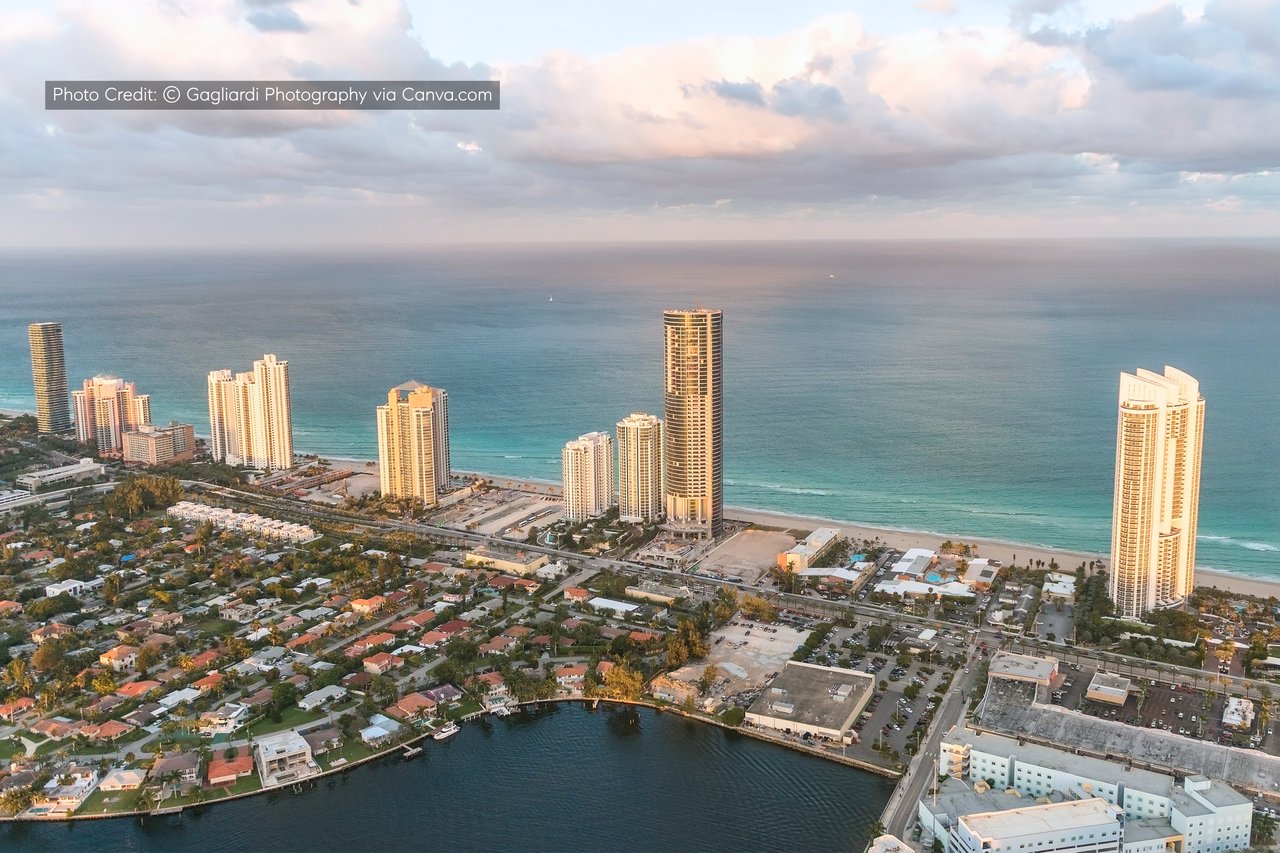
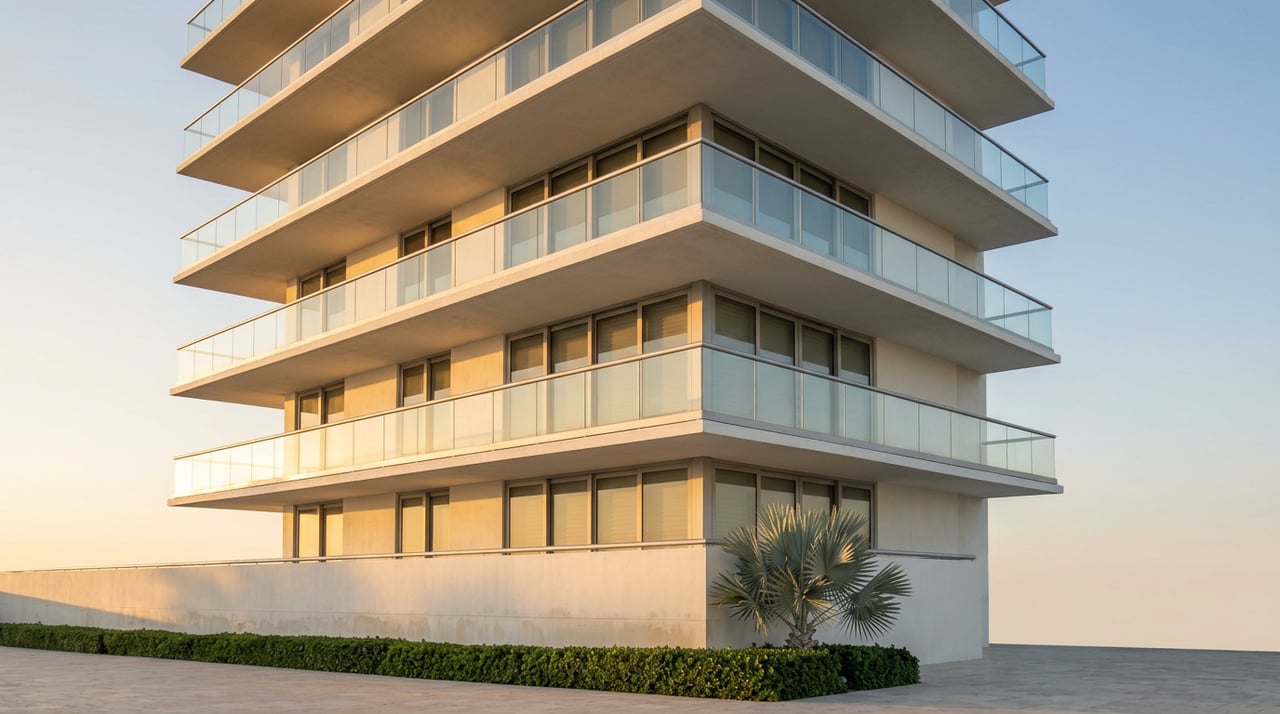
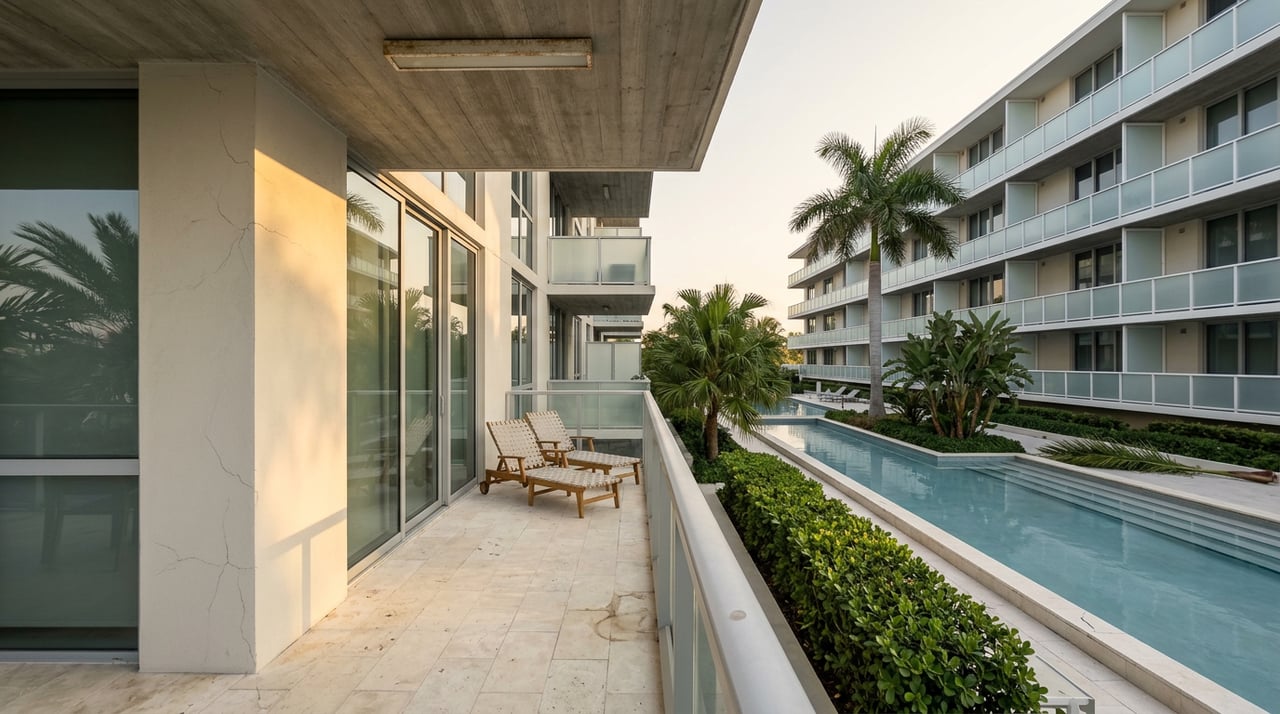
The luxury tier is where the gap between a building's image and its structural file is widest, and the ocean widens it. Many of the oceanfront and Collins Avenue towers that define this market date to earlier building waves, which places a meaningful share of them in milestone or recertification territory right now, while the newest towers remain years away. Age is not the only pressure. Salt air and humidity drive chloride into concrete, corroding the steel inside and breaking the surface away in what engineers call spalling, and it surfaces on the balconies, walkways, and garages of exactly the waterfront buildings that command the highest prices.
The consequences are not hypothetical. According to a July 2026 report from the Florida Legislature's Office of Program Policy Analysis and Government Accountability, the City of Aventura alone reported that nineteen condominium and cooperative buildings were found unsafe or uninhabitable through 2025 Phase Two inspections. The same report flagged that inspection data, particularly in Miami-Dade, is reported unevenly, so a clean public database is not something a buyer can lean on. When I represent a buyer, the first documents I request are the milestone inspection summary and the last twelve months of board minutes, because that pair tells me what a listing never will. At this level, the association's financial and structural health is part of the asset, and I price it that way.
What to Verify Before You Close
Start with the record, not the finishes. A serious pre-closing review of a Miami condominium should confirm:
Milestone inspection status. A Phase One inspection is a licensed engineer's visual review. A Phase Two follows only if substantial deterioration is found. If your building had a Phase Two, ask what it found and where the work stands, since owners must begin required repairs within 365 days of that report.
The inspector's summary. Associations must distribute the summary to owners within 45 days and post it where a website is required. If no one can produce it, treat that silence as information.
SIRS completion and scope. According to Florida's Division of Condominiums, a reserve study must address the roof, load-bearing structure, foundation, fireproofing and fire protection, plumbing, electrical, waterproofing and exterior painting, and windows and exterior doors. Associations that existed on or before July 1, 2022 were required to complete their study by the end of 2025, so most established buildings should now have one on file.
Reserve funding. A study on paper means little if the reserves behind it are thin. Read the funding plan, not just the report.
Assessments and minutes. Review what has been billed and what is proposed, then read a year of board minutes. A single line item, or one heated meeting, can reset the true cost of ownership before it ever reaches a listing.
Read more: If you would rather buy a tower years away from its first inspection, newer product is worth understanding → How To Evaluate Downtown Miami Pre-Construction Condos
The Insurance and Financing Angle Buyers Miss
Compliance is not only about safety. It shapes whether a building can be insured and financed. An association that falls out of compliance with its milestone and reserve obligations can lose access to Florida's state backed Citizens insurance, which pressures premiums for every owner in the building. Lending matters too, even to cash buyers. Some lenders now decline to finance buildings that lack a completed inspection or adequate reserves, and a building that lenders avoid has a smaller resale pool when you eventually sell. For an oceanfront tower already carrying high coastal insurance costs, both belong on your checklist before you commit.
Read more: For buyers weighing where to own on the water → Sunny Isles or Bal Harbour for Oceanfront Condo Buyers?
Newer Towers Versus Established Buildings
Both can be excellent, but they carry different questions. A newly delivered or pre-construction residence will not face a milestone inspection for years, which is part of its appeal to buyers who want a clean horizon and predictable carrying costs. An established trophy building offers location, scale, and a proven address, but it deserves closer scrutiny of its inspection and reserve position. Neither is automatically the better buy. The point is to know which one you are choosing, and to price the risk you are accepting.
What Buyers Are Asking Right Now
Does every Miami condo need a milestone inspection? No. The requirement applies to buildings of three or more habitable stories, generally once they reach thirty years of age, though Miami-Dade applies a twenty-five year trigger to coastal buildings. Newer towers are not there yet, but they will be, so a building's age drives your long term costs.
Can a pending special assessment really change my decision? It should change your price. A large upcoming assessment is a real cost of ownership, and once it is disclosed it is often negotiable between buyer and seller.
Can I trust an online database to confirm a building is compliant? Not on its own. Florida's own 2026 review found inspection data reported unevenly, especially in Miami-Dade. Confirm status from the association's actual records, not a public list.
A Buyer's Pre-Closing Checklist
Confirm the milestone inspection. Ask for the report, the summary, and any Phase Two findings.
Confirm the SIRS. Verify it is complete and read the funding plan behind it.
Check the reserves. A funded reserve is protection. A thin one is a future bill.
Review assessments and minutes. Recent and proposed dues, plus a year of board minutes.
Confirm insurance and lending. Ask about the association's coverage, its compliance standing, and whether lenders treat the building as warrantable.
Use your review window. Under House Bill 913, a resale buyer now has seven days after receiving the condominium documents to review them and cancel, up from three. Use every day of it.
Final Perspective
A luxury condominium in Miami is only as strong as the building around it. The residences that protect their owners are the ones inside associations that inspected on time, funded their reserves, and planned their repairs before a deadline forced the decision. I live and work in South of Fifth, I know these buildings by name, and I read their inspection and reserve files the way I read their floor plans. That is the difference between buying a great home and inheriting someone else's deferred maintenance.
Work With Carlo Dipasquale
The residence is the easy part. The building behind it is where the real diligence lives. If you are buying a luxury condominium in Miami Beach, South of Fifth, Brickell, or the barrier island and want a precise read on a building's compliance, reserves, and true cost of ownership, connect with Carlo Dipasquale for a private consultation.
FAQ
What is a milestone inspection? It is a structural safety inspection Florida requires for condominium and cooperative buildings of three or more habitable stories, generally once they reach thirty years of age, or twenty-five for coastal buildings in Miami-Dade. Phase One is a visual review, and a Phase Two follows only if substantial deterioration is found.
What does a SIRS cover? According to Florida's Division of Condominiums, a Structural Integrity Reserve Study addresses major elements including the roof, load-bearing structure, foundation, fireproofing, plumbing, electrical, waterproofing and exterior painting, and windows, and sets a savings plan to pay for them.
Should a pending assessment stop me from buying? Not necessarily. It should inform your price. Once an assessment is known, it becomes a negotiable cost between buyer and seller.
Are newer buildings safer than older ones? Not inherently, but newer buildings are further from their first milestone inspection, so their near term repair risk is lower. Established buildings can be excellent when they are compliant and well funded.
How long do I have to review the condominium documents? Under House Bill 913, a resale buyer has seven days after receiving the association's documents to review them and cancel the contract.
This article is general information for Miami-Dade condominium buyers and is not legal, financial, or engineering advice. Details of Florida's condominium safety laws are drawn from the Florida Governor's office, Florida's Division of Condominiums (DBPR), Miami-Dade County, and the Florida Legislature's Office of Program Policy Analysis and Government Accountability. Deadlines, funding rules, and a specific building's status should be verified with the condominium association and a licensed Florida professional before closing. Carlo Dipasquale is a real estate agent affiliated with Compass.