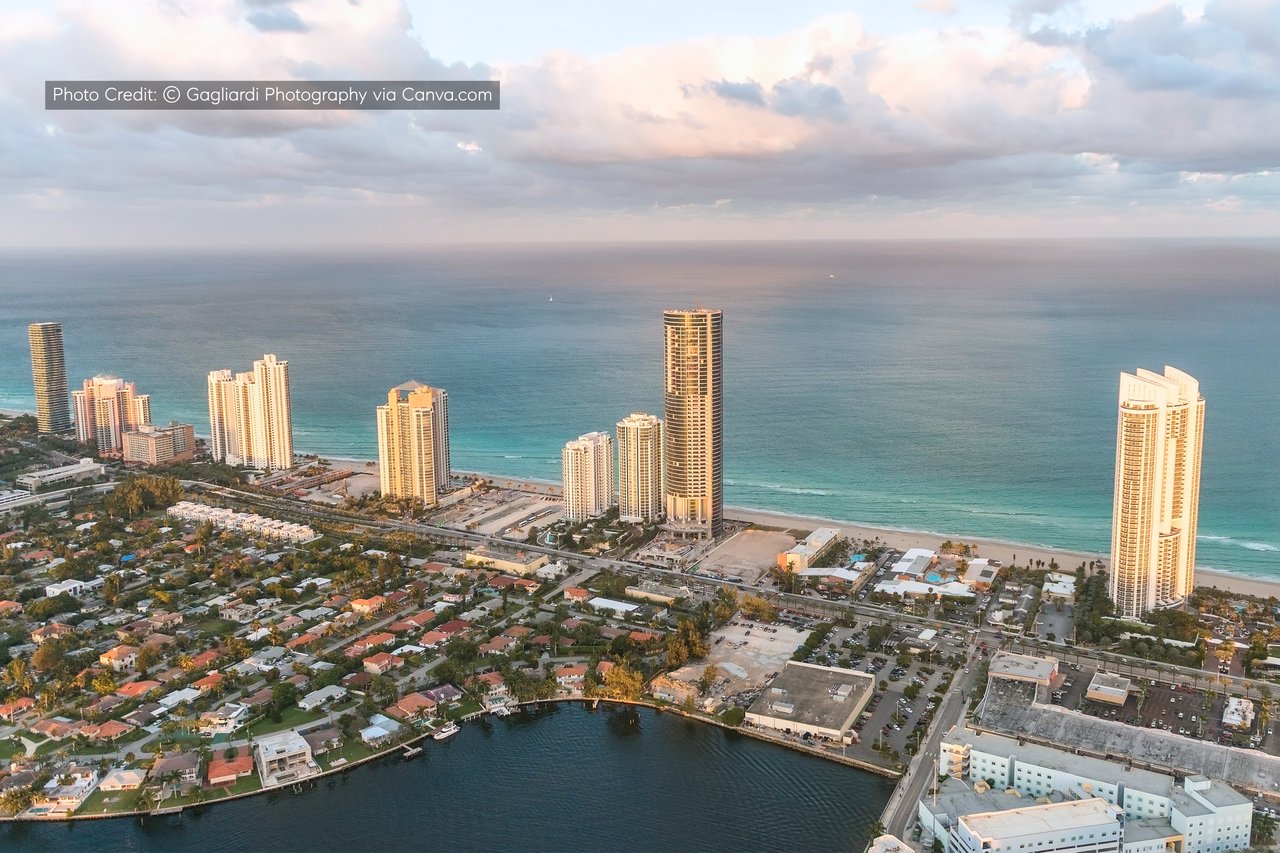

A seller's guide to the federal and county taxes that shape your net at closing, written for owners of high-value homes and condominiums across Miami Beach and Miami-Dade.
For owners in South of Fifth, Continuum, and the waterfront buildings along Miami Beach who want to understand what a sale really puts in their pocket. This is the framework I walk sellers through before we ever talk about a listing price.
The Takeaway
Florida takes nothing from the gain on your sale. There is no state income tax and no state capital gains tax here, which is one of the quieter reasons so much wealth has relocated to Miami over the past decade. The federal government is a different story, and at our price points, the federal bill gets large fast. Three questions decide almost everything: was the property your primary home, are you a foreign owner, and was the unit held as an investment? Each answer sends the numbers in a completely different direction. What follows is general guidance rather than tax advice, and every seller at this level should have a CPA at the table. Knowing the shape of it early is what lets you time the sale and price it with your eyes open.
The Florida Advantage, and the One County Cost People Forget
Does Florida tax the profit when you sell? No. Because there is no personal income tax in the state, your gain is taxed only at the federal level. A seller closing the same deal in New York or California can watch state tax add double digits to the bill. For owners who established Florida residency before selling, that difference alone can run into the hundreds of thousands on a high-end sale.
There is one local cost to plan for. According to the Florida Department of Revenue, Miami-Dade charges a documentary stamp tax on the deed at $0.60 per $100 of the sale price for a single-family residence. Here is the part that catches condo sellers off guard: that reduced rate applies only to single-family homes. A condominium sale is taxed at $1.05 per $100 once the county surtax is added. On an eight-figure Continuum unit, that gap is real money, and by custom it lands on the seller, though it stays negotiable in the contract.
The Primary Residence Exclusion
How much profit can you shield when you sell your main home? According to the IRS, if the property was your primary residence for at least two of the five years before the sale, you can exclude up to $250,000 of gain if you file single, or $500,000 if you are married filing jointly. Across most of the country, that exclusion erases the entire profit. In our buildings, it rarely comes close, since an owner who bought a decade ago may be sitting on a seven-figure gain. It still matters because it comes off the top before any capital gains rate applies.
Two things sellers routinely miss. The two-year test does not require consecutive years, and you do not have to be living there the day you sell, so an owner who moved out within the past three years may still qualify. And your cost basis is almost certainly higher than you remember. A gut renovation, new impact glass, and a reconfigured floor plan all add to your basis and lower the taxable gain. In a market where a beautifully renovated unit commands a premium, the invoices you kept can be worth six figures at tax time.
Read more: For how pricing and preparation actually drive a sale in these buildings, this pairs well with the tax picture → How Do You Sell a Continuum Penthouse Without Sitting on the Market?
Capital Gains at This Level
What rate hits the gain above the exclusion? For property you have owned longer than a year, according to the IRS, long-term capital gains are taxed at 0%, 15%, or 20%, depending on income, and at luxury sale prices, you should plan around the 20% bracket. On top of that, an additional 3.8% Net Investment Income Tax applies to higher-income households, which pushes the effective federal rate to 23.8% for many of the sellers I work with. Thresholds move a little each year, so confirm the current figures with your CPA.
Sell inside the first year, and the math changes hard. The gain is treated as ordinary income, taxed at rates up to 37%. That is exactly why I counsel patience on a recent purchase, because crossing the one-year mark can reset the rate on your profit. One more case worth knowing: inherited property gets a stepped-up basis to its value at the date of death, so heirs who sell a family condo soon after inheriting often owe far less than they expect, sometimes almost nothing.
FIRPTA, If You Are a Foreign Owner
Do foreign sellers pay more? Not more tax, but there is mandatory withholding, and it surprises people every time. Under FIRPTA, according to the IRS, when a foreign person sells U.S. real estate, the buyer must withhold 15% of the gross sale price at closing and send it to the IRS. Notice the word gross. On an $8 million sale, that is $1.2 million held back, regardless of your actual profit. It is a deposit against your final bill, not the tax itself, and you recover the excess when you file a U.S. return. The cash-flow hit at closing is what stings.
In a market as international as Miami Beach, I raise this in my first conversation with any foreign owner. There is a way to manage it. A withholding certificate from the IRS can lower the amount held back when your real tax will be smaller, but the application takes time, so the planning has to start before we list, not the week of closing.
When a 1031 Exchange Fits
Can you defer the capital gains? Yes, but only on investment property, never on your own residence. A 1031 exchange lets you roll the full proceeds of an investment sale into another investment property and push the tax down the road. The clock is unforgiving. You identify the replacement within 45 days of closing and complete the purchase within 180 days, with a qualified intermediary handling the funds the entire way. Miss a date, and the deferral disappears. Where I see it used well is an owner selling a leased unit in Edgewater or Brickell and exchanging it for a pre-construction opportunity or a larger income property. Where it falls apart is a "rental" that was really a second home, because the IRS looks at how the unit was genuinely used. If you have held a condo as a rental, we should have the 1031 conversation before you sign a listing agreement, since the structure drives the whole timeline.
What Sellers Are Asking Right Now
Do I owe Florida capital gains tax on my sale? No. Florida has no state income tax, so your gain is taxed only federally. You will still owe Miami-Dade documentary stamp tax on the deed at closing.
How long do I have to live here to use the exclusion? The IRS requires ownership and use as your primary home for at least two of the five years before you sell. That shields up to $250,000 of gain, or $500,000 for a married couple.
I am not a U.S. citizen. What should I expect? Plan for 15% of the gross price to be withheld at closing under FIRPTA. It is refundable through a U.S. return, but start the paperwork early if you want to reduce it.
Strategic Positioning for Sellers
Plan the tax side six months before you list, not the week of closing. The sellers who net the most are almost never the ones who simply priced well. They are the ones who prepared.
Establish Florida residency properly, and do it before the sale. This is often where the biggest savings come from.
Pull your renovation records now. Every documented improvement lifts your basis and lowers your gain.
If you are a foreign national, start the FIRPTA certificate early. The timeline, not the tax, is what causes the pain.
If it is an investment unit, settle the 1031 question first. That decision dictates everything that follows.
Final Perspective
None of this shows up in the sale price, yet it decides what you keep. Selling a high-value home in Miami is far less about guessing the market top and far more about arriving at the closing table with the tax side already handled. The owners who do best treat the planning as part of the sale itself, months ahead, so that nothing at closing is a surprise.
Work With Carlo Dipasquale
If you own in South of Fifth, at Continuum, or anywhere along the Miami Beach waterfront and want a clear read on what a sale would actually net you, connect with Carlo Dipasquale. I am glad to walk through it and introduce you to tax professionals who handle sellers at this level every day.
FAQ
Does Florida have a capital gains tax on home sales? No. There is no state income tax in Florida, so the gain is taxed only at the federal level. Sellers still pay Miami-Dade documentary stamp tax on the deed at closing.
Who pays the documentary stamp tax in Miami-Dade? By custom, the seller, though it is negotiable. According to the Florida Department of Revenue, the rate is $0.60 per $100 for a single-family residence, while a condominium is taxed at $1.05 per $100 with the county surtax included.
What is FIRPTA withholding on a Miami condo sale? When a foreign owner sells, the buyer withholds 15% of the gross sale price and remits it to the IRS at closing. It is a prepayment rather than a final tax, recovered by filing a U.S. return, and it should be planned for before listing.
Can I use a 1031 exchange on my primary residence? No. A 1031 applies only to investment property. If you have rented out a unit, you may qualify, but the replacement must be identified within 45 days and purchased within 180 days of your sale.
How much gain can I exclude when I sell my primary home? According to the IRS, up to $250,000 if you file single or $500,000 if married filing jointly, provided you owned and lived in the home for at least two of the last five years.
Source: Tax rates and thresholds referenced throughout are drawn from the IRS and the Florida Department of Revenue and reflect figures current as of 2026. Bracket thresholds adjust annually and are approximate. This article is general information, not tax or legal advice.