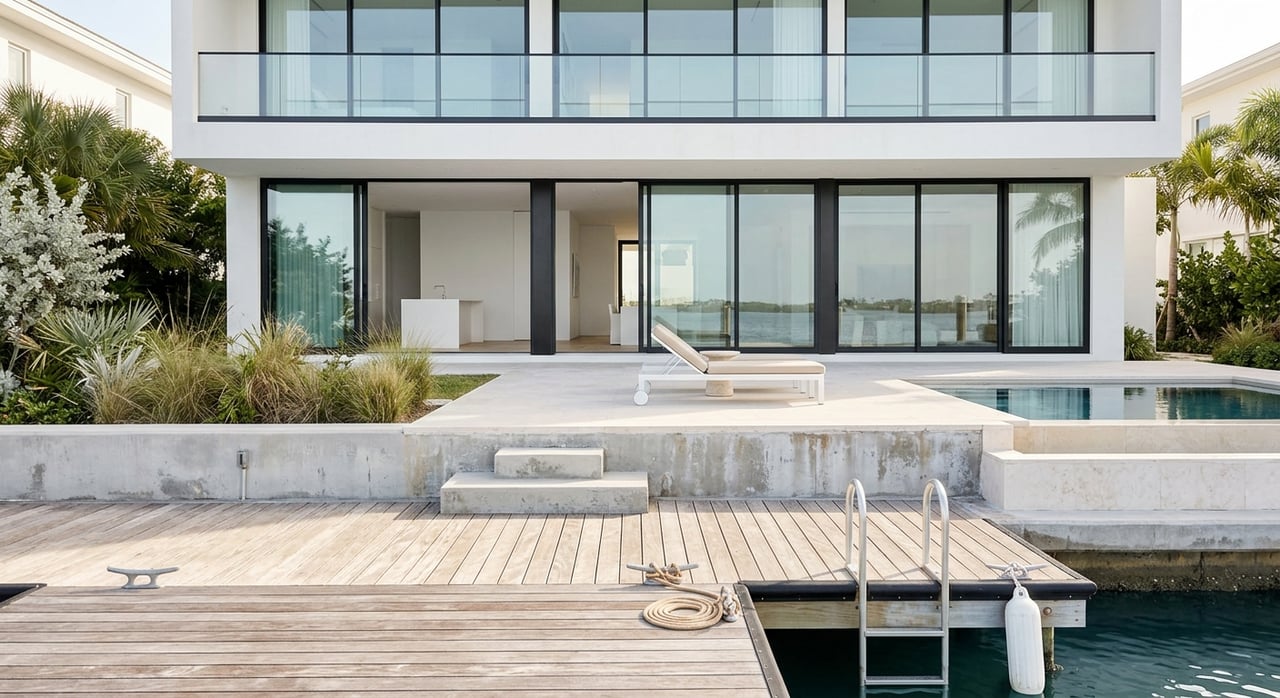
Wondering if waterfront life on the Venetian Islands is truly ideal for a boating lifestyle? For many buyers, the answer depends less on the view alone and more on how well the property fits your vessel, your schedule, and your comfort with marine upkeep. If you are considering a bayfront home here, this guide will help you understand what boating access, dock logistics, and daily life really look like so you can make a smarter decision. Let’s dive in.
Why Venetian Islands Appeal to Boaters
The Venetian Islands sit in Biscayne Bay between Miami and Miami Beach, connected by the historic Venetian Causeway. According to Miami-Dade County, the causeway dates to 1927 and includes 12 bridges, creating a rare bayfront residential setting with direct links to both sides of the bay.
That layout is a major reason boating enthusiasts pay close attention to this area. Instead of prioritizing oceanfront frontage, Venetian Islands living tends to center on bay access, private dock potential, and proximity to boating routes through Biscayne Bay.
This also feels distinctly residential. The City of Miami Beach highlighted 2024 road resurfacing work on Di Lido, Rivo Alto, and San Marino, reinforcing that these are lived-in island neighborhoods rather than a resort corridor.
Boating Access Starts With Bridge Clearance
If you are buying here for your boat, the first thing to review is air draft. NOAA’s Coast Pilot lists the west Venetian Causeway bascule bridge with 12 feet of closed clearance and the east bascule bridge with 5 feet of closed clearance.
That matters because not every vessel will move through the causeway corridor the same way. If your boat has taller fixed structures, you will likely need to plan around bridge openings instead of moving freely at any time.
The current federal bridge rule states that both bascule bridges open on signal, but from 7 a.m. to 7 p.m. daily they open on the hour and half hour. In practical terms, that creates a boating routine. For some owners, that is no issue. For others, especially those who want quick, spontaneous departures, it is an important lifestyle consideration.
What bridge timing means for you
Bridge timing can shape how you use your home and boat together. Before you buy, it helps to think through:
- Your vessel’s air draft
- Whether you boat mostly during daytime hours
- How often you want to head out without waiting for a scheduled opening
- Whether your typical routes depend on passing through the bascule spans
For serious boaters, these are not minor details. They are part of the day-to-day ownership experience.
Bay Navigation Has Its Own Rhythm
Beyond bridge height, the surrounding navigation pattern also matters. NOAA notes a slow-no-wake zone in the causeway corridor, extending from 100 yards north of the Venetian Causeway bascule bridge to the southern tip of Claughton Island.
That tells you something important about the area. Venetian Islands boating is convenient, but it is not designed for high-speed movement right off your dock. The setting favors controlled bay navigation, careful maneuvering, and a more measured pace as you enter the broader Biscayne Bay network.
NOAA also places this access within a larger system that includes Miami Beach Channel and Sunset Harbor Channel, with Sunset Harbor Channel connecting just north of Belle Isle. For buyers, that means the value here is tied to connected bay boating, not just a single stretch of waterfront.
Dock Options Matter More Than Many Buyers Expect
A beautiful seawall and a boat at the dock can make a property feel turnkey, but waterfront ownership involves more than appearance. The City of Miami Beach’s interactive permit guide identifies two basic residential dock types: floating docks and stationary docks on pilings.
That distinction matters because each setup affects access, maintenance, and how the property functions for your vessel. A floating dock may suit one owner’s needs, while another may strongly prefer a fixed configuration supported by pilings.
If you are comparing homes, ask direct questions about the dock design instead of assuming one setup works like another. Even within the same waterfront district, dock utility can vary from property to property.
Seawalls require attention too
The same Miami Beach permitting guide states that seawalls are special construction and require DERM approval in addition to a building permit. For you as a buyer, that means seawalls are not just passive background features. They are regulated waterfront infrastructure.
This becomes especially important when evaluating older waterfront homes, renovation plans, or properties where marine improvements may be part of your long-term strategy. In luxury waterfront real estate, the house and the marine edge of the property should be evaluated together.
Waterfront Ownership Includes Ongoing Marine Upkeep
Many buyers focus first on the residence itself, but marine elements require ongoing care. Miami Beach’s code compliance information notes that marine code applies to docks, pilings, piers, seawalls, and boats secured to them, as well as sunken vessels, debris in waterways, and derelict vessels.
The takeaway is simple: owning waterfront property on the Venetian Islands usually means managing more than landscaping, roofing, and interiors. You are also taking on a marine component that benefits from regular oversight.
For some buyers, that is part of the appeal. For others, it is a reason to be selective about property condition, dock setup, and the scope of future maintenance.
Private Dockage Is a Key Consideration
Miami Beach states that the city does not currently have a regulated mooring field. In practical terms, that suggests long-term boat storage is more likely to depend on private dockage or marina slips rather than public mooring.
That is one reason dock-ready homes can be especially compelling to buyers with an active boating lifestyle. If your goal is to step from your residence to your vessel with minimal friction, private dock access may be one of the most important filters in your search.
Daily Life on the Venetian Causeway
Living here means boating and driving are both shaped by the causeway. Miami-Dade notes that the Venetian Causeway toll plaza is cashless and has four lanes, so your daily routine includes a toll corridor as part of the island experience.
That does not make the location inconvenient, but it does make it specific. Buyers who love the Venetian Islands usually appreciate that the setting feels removed yet connected, with a rhythm that is different from mainland neighborhoods.
There are also alternative transportation options nearby. Miami Beach says its commuter water taxi connects Maurice Gibb Memorial Park and Sea Isle Marina in about 20 minutes with no bridge-open delays. For some residents, that adds another bay-oriented layer to daily movement.
How Venetian Islands Differ From Oceanfront Living
If you are choosing between bayfront and oceanfront property, the difference is not just visual. Venetian Islands living is generally more about dock convenience, Biscayne Bay access, bridge logistics, and marine infrastructure than direct beach frontage.
That shift can be a major advantage if boating is central to your lifestyle. Instead of paying for proximity to the ocean as a backdrop, you may be prioritizing how efficiently the property works for vessel access and day-to-day waterfront use.
For the right buyer, that is a meaningful distinction. This is a micro-market where boating practicality can matter just as much as architecture, finishes, and views.
Questions to Ask Before You Buy
If you are seriously considering a Venetian Islands waterfront property, it helps to screen each opportunity with a boating-first lens.
Focus on these buying questions
- Does your vessel fit the bridge clearance and opening routine?
- Does the property have the dock type you prefer?
- What condition are the dock, pilings, and seawall in?
- Are you comfortable with ongoing marine maintenance responsibilities?
- Do you want private dockage as part of your ownership plan?
- Does the location support how often and when you typically use your boat?
These questions can quickly separate a property that merely looks waterfront from one that truly supports your lifestyle.
Why Expert Guidance Matters Here
Venetian Islands waterfront purchases involve more than design taste and pricing. You are often weighing bridge access, marine structures, permitting context, and everyday convenience all at once.
That is where local, micro-market guidance becomes valuable. If you want a property that aligns with your boating habits, not just your aesthetic preferences, you need a search strategy grounded in how this bayfront district actually works.
If you are exploring Venetian Islands waterfront opportunities, Carlo Dipasquale offers discreet, high-touch guidance tailored to luxury buyers seeking bayfront homes that fit both lifestyle goals and practical waterfront needs.
FAQs
What makes Venetian Islands appealing for boating enthusiasts?
- Venetian Islands appeal to many boaters because they offer bayfront residential living in Biscayne Bay, private dock potential, and access to boating routes connected through the broader bay network.
What bridge clearances affect boating from Venetian Islands?
- NOAA lists the west Venetian Causeway bascule bridge at 12 feet of closed clearance and the east bascule bridge at 5 feet, so vessel air draft is an important factor when evaluating access.
What is the Venetian Causeway bridge opening schedule for boaters?
- Under the current federal rule, the bascule bridges open on signal, but from 7 a.m. to 7 p.m. they only need to open on the hour and half hour.
What dock types are allowed at Miami Beach waterfront homes?
- Miami Beach’s building guide identifies floating docks and stationary docks on pilings as the two basic residential dock types.
What maintenance responsibilities come with Venetian Islands waterfront homes?
- Waterfront ownership may include ongoing attention to docks, pilings, piers, seawalls, and boats secured to them, along with compliance related to marine conditions and debris.
Is public mooring available for long-term boat storage in Miami Beach?
- Miami Beach states that the city does not currently have a regulated mooring field, so long-term boat storage is more likely to rely on private dockage or marina slips.
How is Venetian Islands living different from oceanfront living in Miami Beach?
- Venetian Islands living is generally more focused on Biscayne Bay access, dock convenience, bridge timing, and marine logistics, while oceanfront living centers more on direct beach frontage.