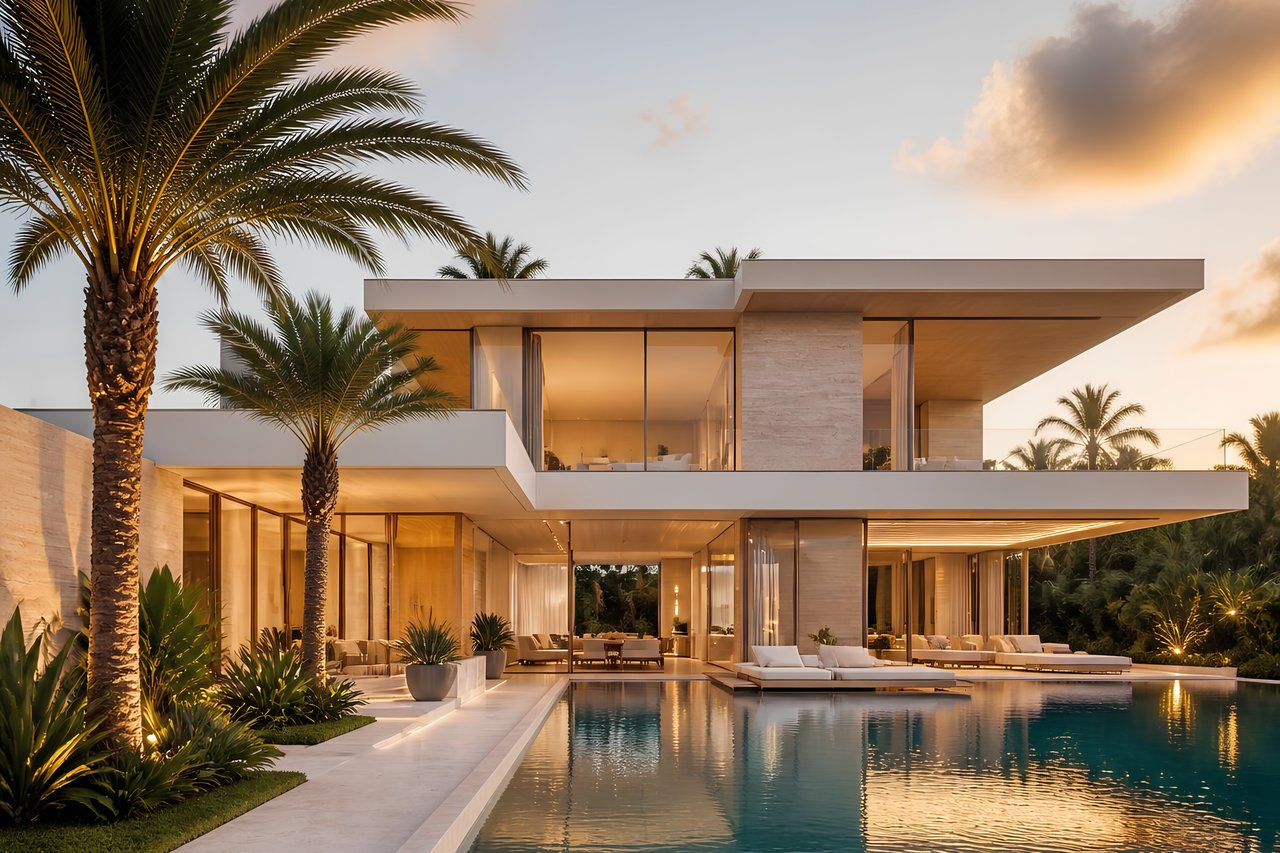
How Miami Beach owners use private exclusives and delayed listings to sell discreetly, guard their price history, and reach qualified buyers before a home ever goes public.
If your name, your face, or your front gate is recognizable, a public listing is not neutral. It is an announcement. This is a guide for owners in South of Fifth, on Fisher Island, and across the guard-gated islands who want to know when a quiet sale protects them, when it costs them, and how the mechanics actually work in Miami-Dade right now.
The Takeaway
Off market is a decision, not a default. Sold well, a private sale keeps your plans out of public view, spares you a lived-in home full of curious strangers, and puts your residence in front of real buyers before any clock starts running against you. Sold carelessly, that same quiet becomes a smaller audience and a softer number. What tips the scale is specific to you: how visible you are, how distinctive your home is, and whether you value control more than raw reach. The owners who use privacy well in Miami Beach are not hiding. They are choosing their audience on purpose.
What "Off Market" Really Means Here
An off-market sale trades without the home being advertised to the general public. Buyers come through a broker's private network and relationships, not through a public search bar.
There are two honest versions of this, and they are not the same thing. A private exclusive holds a property out of the shared listing system altogether, so it lives inside a single brokerage and its buyers. A delayed listing goes into the system where cooperating agents can see it, but the public advertising, the photos, and the syndication stay dark for a set window. At Compass, these run through Compass Private Exclusives and Compass Coming Soon, which let me introduce a residence quietly to qualified buyers and their agents before anything hits the open market. Either way, you sign a disclosure first. That signature is not paperwork to rush past. It is the document that confirms you understood exactly what you were choosing.
One thing worth knowing, because it separates a real strategy from wishful thinking: under National Association of REALTORS® policy, once a home is marketed publicly it generally has to be filed with the local listing service within one business day, and a private conversation between two individual brokers does not trigger that. Since 2025, sellers also have a formal delayed-marketing option, with each local market setting how long the window can run. Privacy is real, it is allowed, and it is fenced by rules. The difference is having an agent who works inside them cleanly instead of guessing.
Why a Quiet Sale Can Beat a Loud One
For a recognizable owner, discretion is protection, not vanity. It controls who gets inside your home and what the market learns about your timing.
Open the doors publicly and you invite everything in with the buyers: the neighbor who wants a tour, the account that screenshots interiors, the security exposure of a widely known address, and a permanent, searchable record of every price move. A private process strips that out. It also protects something most sellers underestimate, which is the story the market tells about your home. A residence that never sits publicly has no visible reduction, no climbing days-on-market, no quiet suggestion that something must be wrong with it. In the upper tiers of Miami Beach, that untouched narrative can be worth as much as the exposure you set aside to keep it.
There is a practical edge too. A private phase lets you read genuine buyer appetite before you plant a number in front of the whole market. Strong response tells you where to price. A soft one teaches you the same lesson without a paper trail, and with every public option still open.
The Trade-Off Nobody Should Skip
Fewer eyes can mean fewer offers, and fewer offers can mean a lower price. Privacy is only smart when the home and the network behind it can absorb that trade.
This is where off market goes wrong for the wrong seller. Competition is what pushes a price up, and a home only a few people ever see may simply draw less of it. So the real question is not whether privacy sounds appealing. It is whether your particular residence, and what you personally want out of the sale, justify giving up some of that competitive pressure in exchange for control. For a truly distinctive home reaching a narrow, well-advised pool, the private route often wins outright. For a condo with dozens of close comparables where bidding energy does the work, the open market usually earns more. I tell sellers the truth about which one they own before we choose a path.
Who It Actually Suits
The best fits are recognizable owners, occupied trophy homes, and sellers who want control over speed.
In my experience the strongest candidates fall into a few groups. The public figure who cannot have a lived-in home paraded through showings. The owner of a landmark residence on Star Island, Indian Creek, or the Venetian Islands who wants no attention on their plans at all. The seller testing a price privately before committing to it publicly. The estate or trust that would rather keep the whole transaction discreet. If your home sits in South of Fifth, on the Sunset Islands, or across Government Cut on Fisher Island, discretion tends to come naturally with the address. If you are chasing maximum competition on a widely comparable unit, be honest with yourself and go public.
What Sellers Are Asking Right Now
Will I leave money on the table selling off market?
You might, if privacy shrinks your audience below what the home needs to draw competing offers. You might also protect real value by keeping a clean price history and reaching qualified buyers directly. The residence, the network, and how the private phase is handled decide it, not the label.
Is an off-market sale even allowed?
Yes. Private and delayed-marketing sales are permitted, as long as you sign a disclosure confirming you understand the trade-off. The framework exists specifically to give you the choice.
Can I start private and go public later?
Usually, yes. A private window first, then a public launch if you want broader reach, is one of the most effective sequences there is. Getting the order and timing right is the strategy.
Strategic Positioning for Sellers
A private sale rewards intention. In practice:
Name your goal first. Control and privacy, or maximum competition. The two are marketed in almost opposite ways, so decide before you list.
Guard the narrative. A clean, unmarked launch protects both your privacy and how the home reads to buyers.
Demand a real network. Off market only works if your agent can actually reach the right buyers here and abroad, not just hold a listing back.
Keep the sequence open. A private phase should preserve your ability to go public, never close it off.
Respect the disclosure. It is your protection. Read it, understand it, and let it do its job.
Final Perspective
Selling off market is not about concealing a home. It is about deciding who sees it, when they see it, and on whose terms. For a visible owner or a genuinely rare residence, that control can be worth more than a spotlight. For a comparable property with room to spark a bidding war, the open market tends to pay better. I live and work in these neighborhoods, I know which buyers move quietly and which need a full launch to act, and I build the plan around your home rather than a formula.
Work With Carlo Dipasquale
The residence is exceptional. The strategy is what protects it. If you own a high-profile or distinctive home in Miami Beach and want a discreet, straight read on whether a private or public sale serves you better, connect with Carlo Dipasquale for a confidential consultation on your specific property.
FAQ
What is the difference between a private exclusive and a delayed listing?
A private exclusive keeps a home out of the shared listing system, marketed only within one brokerage. A delayed listing enters the system for cooperating agents while public advertising stays held back for a set window. Both require your signed consent.
Does an off-market home sell for less?
Not by rule. It can, if privacy narrows the audience too far. It can also protect value by avoiding a visible price history and reaching serious buyers cleanly. The home and the strategy decide the result.
Who is off market best for in Miami?
Recognizable owners, occupied trophy homes, and sellers who value privacy and control over maximum exposure, especially on the guard-gated islands and in South of Fifth.
Can a Miami home be sold completely privately?
Yes, through a private exclusive, provided you sign a disclosure acknowledging you are waiving the benefits of public marketing. Current rules are built to allow it.
How do I decide between private and public?
Weigh your need for discretion against your need for competition, then match it to how comparable your home really is. A local specialist can model both paths for your specific residence before you commit.
General market observations reflect the ultra-luxury Miami-Dade segment and are not a substitute for a property-specific strategy or valuation. Listing rules, including private exclusive and delayed-marketing options, are governed by National Association of REALTORS® policy and local market policies and should be confirmed for your situation before listing. Carlo Dipasquale is a real estate agent affiliated with Compass.